.png?width=1920&height=1080&name=CAR%20WASH%20Exchange%20Banner%202%20(8).png)
From Map Pack to Membership
Brian Mattingly
|
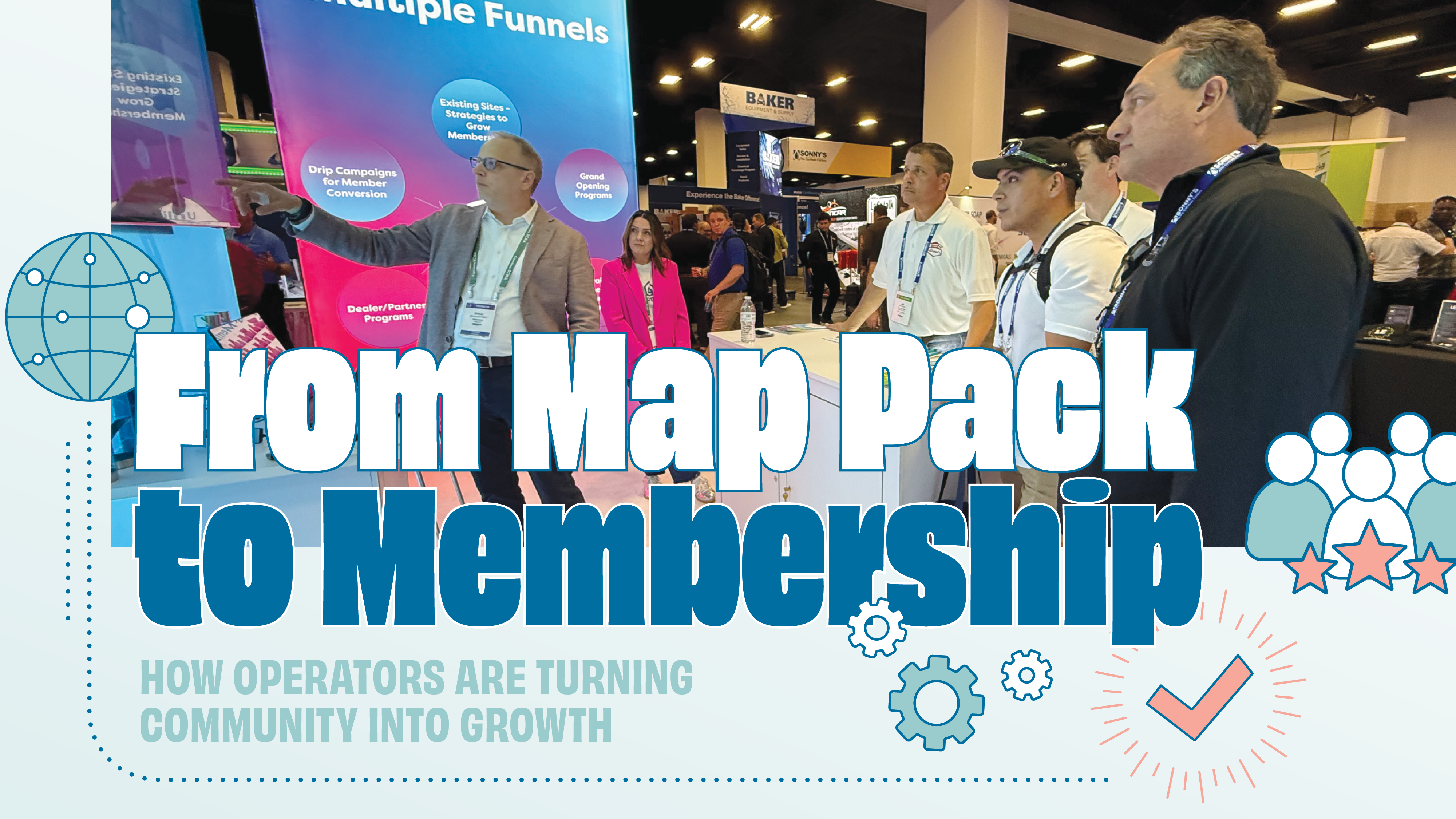
The room didn’t feel like a typical conference session. There were no slides driving the conversation. No one was rushing through a pitch deck. Instead, operators leaned forward in their chairs, trading specifics on which offers worked, what fell flat and where they were struggling to grow.
At a roundtable hosted during the Southwest Car Wash Association (SCWA) event on February 24, I led a fast-track session with industry leaders. The focus was clear: how to grow membership while also driving consistent retail traffic at the local level.
What emerged wasn’t a single tactic; it was a shift in thinking.
Why This Session Mattered
Across markets, operators are facing a similar challenge: growth is no longer as simple as turning on digital ads or running a promotion.
Membership models have matured. Competition has intensified. And in many cases, customers have more options — and more noise — than ever before.
At the same time, retail traffic has become increasingly unpredictable. Weather, seasonality and local competition all play a role, making it harder to maintain consistent volume.
For smaller operators especially, there’s an added layer: marketing maturity. Many are still learning what “good” performance looks like and how to evaluate return on investment.
Meanwhile, midmarket operators are feeling pressure from consolidation, roll-ups and increasingly sophisticated competitors.
The result is a shared tension: how do you grow both recurring membership revenue and day-to-day retail traffic in a sustainable way?
The Big Idea: Community-Based Marketing is a System
If there was one clear throughline from the discussion, it was this: Community-based marketing works, but only when it’s built as a system.
Operators weren’t talking about one-off charity events or occasional sponsorships. They were talking about repeatable, measurable programs tied directly to acquisition and retention.
During the session I shared that community engagement isn’t just about visibility — it’s about creating consistent, trackable pathways for customers to discover and return to your car wash.
The roundtable format brought this idea to life. Operators shared specifics:
- What types of fundraisers they ran
- How they promoted them
- What offers converted best
- How they tracked results
- And, importantly, what didn’t work.
That level of transparency surfaced a few common challenges:
- Inconsistent execution: Many operators run community efforts sporadically, without a repeatable cadence.
- Lack of tracking: Difficulty tying fundraisers or partnerships back to memberships or revenue.
- Limited awareness: Even strong local programs struggle if they’re not amplified digitally or executed digitally.
As one operator summed it up simply, “We’re doing things in the community, but we don’t always know what’s actually driving new members versus just goodwill. Often, we are asked to just write a check to a non-profit or organization in the community.”
Takeaway #1: Winning the Map Pack Is Foundational
Before community efforts can scale, operators need to be visible where customers are already searching. That starts with the Google map pack.
Operators emphasized that showing up in the top three results for “car wash near me” is no longer optional — it’s foundational.
According to insights shared during the session, a majority of local search clicks are concentrated in the map pack, with a significant portion driving high-intent actions like directions.
Key tactics discussed included:
- Consistent review generation: Actively asking every customer for feedback and making it part of the operational process.
- Response strategy: Engaging with both positive and negative reviews to improve visibility and trust.
- Profile completeness: Ensuring hours, services, photos and categories are fully optimized.
- Ongoing updates: Treating the Google Business Profile as a living asset, not a one-time setup.
The takeaway: if customers can’t find you, they can’t join your membership — no matter how strong your offer is.
Takeaway #2: Fundraising Drives Both Traffic and Trust
Community fundraising emerged as one of the most effective — and underutilized — growth levers.
Operators discussed how structured programs can simultaneously:
- Bring in new retail customers who are likely to fit your member profile
- Introducing the brand to new audiences
- Create goodwill that translates into repeat visits and memberships.
Programs like those outlined by a few brands demonstrate how fundraising can be systematized, offering organizations a percentage of each wash sold, either sold digitally or in an analog format.
What separated high-performing operators from the rest wasn’t just participation; it was execution:
- Clear offers: Simple, easy-to-understand promotions tied to the fundraiser
- Digital amplification: Supporting events with email, SMS and social promotion
- Repeat partnerships: Building ongoing relationships with schools, teams and local groups.
One operator, who noted that their most successful fundraisers weren’t one-offs, added, “The second and third time we worked with the same group, the results were significantly better.”
The takeaway: fundraising isn’t just about giving back — it’s a scalable acquisition channel when done consistently.
Takeaway #3: Fleet Accounts Create Stable, High-Value Revenue
While much of the industry focuses on individual consumers, fleet accounts represent a powerful, and often overlooked, growth opportunity.
Operators discussed targeting local businesses with multiple vehicles, from delivery services to contractors, as a way to drive predictable, recurring volume.
Fleet programs can be structured with:
- Monthly billing
- Volume-based pricing
- Dedicated lanes or processes.
Key ideas from the roundtable included:
- Local outreach: Direct engagement with nearby businesses.
- Bundled value: Positioning fleet plans as both a convenience and a brand standard.
- Operational alignment: Ensuring staff and systems can support fleet usage without disrupting retail flow.
Fleet accounts don’t just add revenue. These accounts add consistency, helping offset the variability of retail traffic. The biggest challenge for operators was managing and billing the fleet plans.
Closing: The Shift From Tactics to Systems
What made this session stand out wasn’t any single idea.
It was the realization that growth today requires more than isolated tactics.
Winning operators are building systems:
- Systems for generating reviews
- Systems for showing up in local search
- Systems for activating community partnerships
- Systems for capturing and retaining both retail and membership customers.
Community-based marketing, when done right, sits at the center of that system. The saying goes, “Win the community, win the war.”
It connects visibility with trust. It turns local presence into measurable growth. And it creates multiple pathways for customers to discover and return to your car wash.
As operators left the room, the takeaway was clear: The opportunity isn’t just to be part of the community; it’s to build a growth engine around it.