CAR WASH Magazine
Car Wash
On May 11, nearly 10,000 fellow members of our industry will gather at the Music City Center in Nashville, Tenn., for the annual The Car Wash Show, held by the International Carwash Association. This year, as the keynote guest, ICA is delighted to welcome Oscar Munoz, former CEO and chairman of United Airlines.
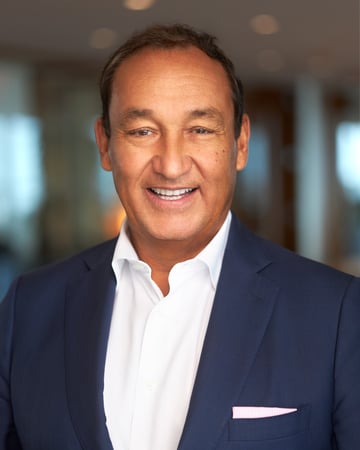
With the car wash industry continuing to adapt to rapid changes — driven by consolidation, technology, and rising customer expectations — Oscar will share the valuable lessons he gained during his eventful tenure at the helm of United and explain how he turned the iconic airline around by focusing on winning back the trust and loyalty of his employees.
Oscar assumed the role of CEO in 2015. He quickly discovered he was taking over an airline that was anything but united. It was, in fact, much farther from unity than he had anticipated.
Five years after United's 2010 merger with Continental, negotiations to integrate the employees of both airlines had reached an acrimonious stalemate — in airline parlance, employees couldn't "fly together" on common metal, meaning they were unable to work as a team on the same aircraft. Trust between customers and the airline had sunk to record lows, and tensions between management and labor had skyrocketed.
Amid this chaos, and after a highly publicized scandal triggered a boardroom upheaval that ousted his predecessor, Oscar stepped in as CEO. His goal? Right the course.
At the time, investors and industry experts were calling for Oscar to adopt quick fixes in the service of short-term gains. But over a long career that includes senior financial positions across a variety of sectors — first at Coca-Cola, then PepsiCo; AT&T and U.S. West; then president and chief operating officer of the rail giant CSX Corp. — Oscar knew from hard-won experience that simply cutting your way to profitability, especially on the backs of employees, is not the route to long-term success.
Instead, he chose to buck the conventional wisdom and adopt a truly radical approach: listening and learning from employees.
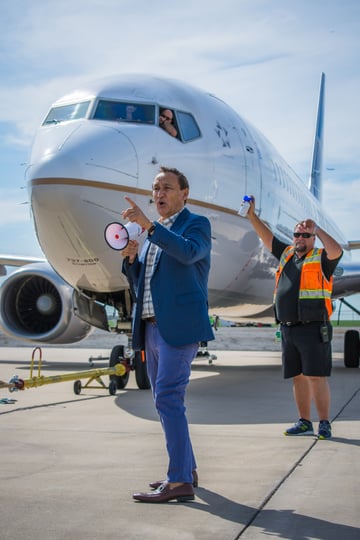
During his first call with investors, he announced that before doing anything else, he would devote his first 90 days to an exhaustive "listening tour," visiting operations across the network so he could hear firsthand from frontline teams to understand how United had lost its way.
Through countless conversations in concourses and galleys, at ticket counters, and on tarmacs, Oscar came to a clear-eyed realization: United had lost the loyalty of its customers because it had lost the trust of its employees.
On his first day on the job — before he even had time to finalize his employment contract — Oscar boarded a flight from his family home in Jacksonville, Fla., bound for Chicago, where United is headquartered. During the flight, he began compiling a list: "Top Ten Dumbest Things We Do."
As he took note of all the problems arising on that particular flight, it didn't take long for his list to exceed just 10 things. Then he noticed something else — the way the flight attendant on board responded to each customer, addressing their problems and complaints with diligence, patience and, above all, courtesy.
So, he started a second list: "What's Right About United." He wrote one thing, and it guided his entire turnaround strategy from that point forward. He wrote simply: "Our People."
It may seem obvious that to improve any service or operation a leader should begin by listening to feedback from the professionals who actually do the job every day.
Unfortunately, this employee-centric philosophy proves too often to be the exception, which is what made Oscar truly exceptional.
"Trust," says Oscar, "it's a commodity that resists an easy valuation. But when you need it, it's priceless." What began with sometimes heated conversations soon gave way to deep insights into what ailed the company's culture, far beyond what any financial data or market research could provide.
For example, during a visit to Chicago's O'Hare International Airport, he began chatting with a ramp employee — the workers you see when you look outside your airplane window as they work below the wings, loading luggage, de-icing the plane in bad weather, and performing other labor-intensive tasks.
This gentleman had decades of service to the company under his belt — the very definition of sweat equity. He used to proudly wear his United gear to social events like his kids' soccer games and family barbecues. "Now," he told Oscar, "I'd rather people think I'm unemployed than admit I work at United" — meaning he simply couldn't bear to listen to another tirade against the service from his family, friends and neighbors.
"I was pissed off hearing that," recalls Oscar. "Not at him but on his behalf. I wanted to light a fire under the ass of the person in charge. Well, now that person was me."
Turning things around would mean reversing course after several years during which United had pared down its service to reduce costs and boost profits. That would have to change, beginning with the simple stuff.
"Coffee and Contracts, Oscar." That was the advice from another frontline employee, a veteran flight attendant at United's flight training facility at its hub, Denver International Airport. Everyone knew that finalizing employee contracts with the biggest unions remained one of the key challenges facing the company. But better coffee?
"At its core, leadership is about active listening," Oscar explains. "This flight attendant was trying to tell me that until I tackled the basics, something as simple as putting better coffee onboard our service — I couldn't be trusted on bigger things like contracts, operations and profits."
"Investing in our product is really an investment in our people, ensuring that the quality of the service they provide to our customers reflects the pride they take in their jobs."
With each takeoff and landing at a new airport, and each decision to reverse past mistakes, it became clear that word was getting around among employees that Oscar meant to be a different sort of CEO from what employees had known before.
Then, 37 days into the job, fate took a turn. While on an early-morning run along Chicago's lakefront, Oscar returned home and suddenly began to feel strange. A vegan at the time, as well as an avid cyclist and former marathoner, Oscar had only recently completed a 100-mile bike race. Yet, on that morning, he felt his forehead and palms go clammy; his legs buckled, and he fell to the floor in pain.
At first, he was inclined to simply lie down and wait it out. But then, he remembered a conversation he'd had with a friend, a cardiothoracic surgeon, only a few weeks before. "Oscar, you'd never believe how many people die on my operating table and they have no idea they're having a heart attack."
With that advice ringing in his head, Oscar dialed 911, and within minutes was admitted to the intensive care unit at Northwestern Memorial Hospital in Chicago. "Had I not made that call and, importantly, told them right away where I was, it would have been the last mistake I'd ever have the chance to make."
He remained in a medically induced coma until he woke seven days later to learn that United's then-general counsel, Brett Hart, had stepped in as interim CEO. Oscar still technically had his life and his job, but only just. Over the next several weeks, as he recuperated, Oscar would have to deal with questions from his board of directors. He would also need to defuse attempts by key investors who were planning a proxy battle, which could potentially threaten Oscar's entire turnaround strategy.
Meanwhile, Oscar learned that he would require a heart transplant if he were to survive, and soon.
Then, employees came to the rescue. As he regained his strength, letters and messages began pouring in from employees across the globe, especially from the places that Oscar had visited during his listening tour. Each morning, his family gathered around his hospital bed and read the notes and well-wishes. "Employees were telling me two things," Oscar says. "Get better and get back to work."
That's exactly what he did, returning to work after several weeks and beginning the task of solidifying his vision and strategy with his executive team.
"During a final critical meeting, my team arrived at a consensus on our go-forward plan," Oscar recalls. "That very morning, my birthday, I received a call on my cell phone from my doctor."
"I've got a kick-ass heart for you. Stay relaxed — but get over here this afternoon and we will operate this evening."
"Hours later, I was wheeled into the operating room to the rhythm of my favorite rock band, the Rolling Stones: You can’t always get what you want. But if you try sometimes, you just might find, you get what you need. That felt fitting to me."
With the transplant successful, Oscar returned to his full schedule at a breakneck pace to make up for lost time. Support from employees had calmed concerns and demonstrated the value of putting employees first.
Oscar and his team embarked on an ambitious multi-year program of growing its network and routes, as well as investing in new technologies that would unleash the full potential of frontline staff.
Many of these innovations were game changers when they were first introduced; now, they're taken for granted.
Tens of thousands of smart devices were deployed across the system, putting real-time data at the fingertips of employees so they can solve problems in the moment.
Gate agents, for example, are now empowered with up-to-the-second information so they can hold the gate door if a connecting flight is late. This allows for valuable extra minutes for passengers to make their connections. Baggage handlers and ramp workers are equipped with damage-resistant iPads that allow them to ensure operational reliability and safety. Uniforms, long designed without employee input, had been a persistent pain point — uncomfortable and ill-suited. New uniforms, designed and tested in collaboration with actual employees, are yet another example of how the smartest changes flow directly from the frontline.
The investment in technology and digital assets proved crucial when the time came to weather the storm brought about by the global COVID-19 pandemic. Touchless kiosks at airports and rapid-fire responses to evolving situations kept the airline flying safely. Despite the limitations to the service, United's customer satisfaction actually increased substantially. "Had we not done the hard work of transforming our culture and investing in our people, we would never have emerged from the crisis in the incredibly strong position that we did," Munoz said.
"And to think it all started with better coffee."
Oscar departed as CEO and chairman in 2021, handing over an airline that had attained top-tier operational and financial performance, ascending levels of customer satisfaction, and industry-leading employee contracts thanks to a renewed spirit of cooperation with its union leaders.
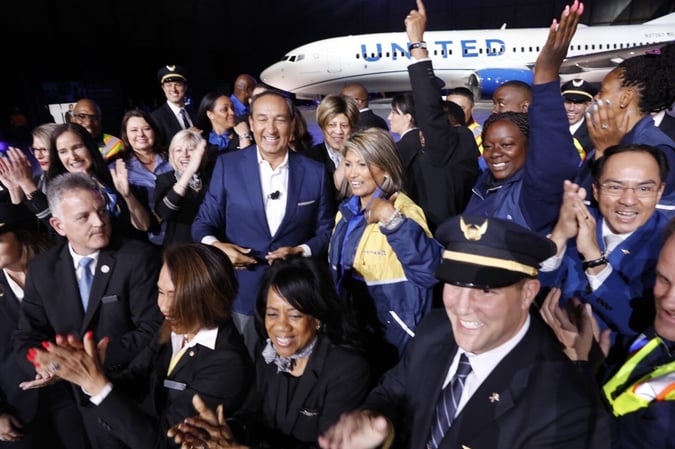
"Oscar Munoz saved United Airlines," says Sara Nelson, president of the Association of Flight Attendants — a sentiment that continues to be widely shared to this day by employees and customers alike.
Today, Oscar is busy writing a new chapter in his life and career. He serves as a board director at some of the world's leading companies, most prominently at Salesforce and as an independent trustee of Fidelity. His work as a strategic advisor to chief executives and other leaders continues to take him around the world.
Yet, even as time passes, if you are walking through an airport to catch your next flight, and you happen to spot Oscar walking the concourse, chances are that you'll find him chatting with employees, still listening and learning from the people on the frontlines. And you'll also notice that they all know to refer to him simply as Oscar.
In his recent best-selling memoir, Turnaround Time: Uniting an Airline and its Employees in the Friendly Skies (Harper Business Publishing), Oscar traces his journey from humble beginnings and how it shaped his values and approach to leadership.
Born in Mexico and raised for a time by his maternal grandmother, Oscar immigrated to the United States at a young age, finally being reunited with his mother in Southern California. As the first in his family to attend college, he's chosen to repay the opportunities afforded to him by forming a charitable foundation, Pave It Forward, which provides scholarships to young first generation college students.
In excellent health, he has become a leading advocate and partner with the American Heart Association, raising research funds and awareness for heart health, especially in underserved communities.
As it celebrates its 100th anniversary, United Airlines is flying high and charting the next century of aviation.
It is welcoming the world to the era of modern supersonic travel thanks to its partnership with the Denver-based aerospace company Boom Supersonic.
United serves as a pioneer investor in cutting-edge carbon capture and sequestration, a technology that literally pulls carbon out of the air and promises to make commercial aviation not only cleaner and sustainable but also cheaper.
As CEO, Munoz forged a partnership with Archer Aviation, where he is now a board director, which is the leader in developing electric takeoff and landing (EVTOL) aircraft. Soon, its Midnight "flying taxi" will be carrying the United Airlines' livery as the official air taxi provider of the Los Angeles 2028 Olympic Games and Team USA. Yes, that’s right; flying taxis are no longer a futuristic concept from "The Jetsons" era but a reality. Recently, United and Archer announced initial routes across the New York-New Jersey region to John F. Kennedy International Airport, with dozens more routes to be introduced in the coming year.
With this rapid progress, it's worthwhile remembering how it all started — with cultural transformation and an emphasis on investing in employees.
The term "Turnaround Time" is an airline industry term of art — the time it takes for an aircraft to land, replenish and take off again. Turning around an aircraft and turning around an airline are vastly different tasks, as Munoz can tell you. But, like any highly complex, service-driven business, where thousands of frontline employees are interacting with customers every day, it takes a united team to do it well.
As the car wash industry gathers in Nashville this May, attendees will be eager to hear directly from Oscar about how their own organizations can become more nimble and adaptive to change, harness new technology, and build resilient teams and culture.
-1.png?width=1920&height=1080&name=CAR%20WASH%20Exchange%20Banner%202%20(2)-1.png)